


Deterministic AI: Designing reliable business automation pipelines
Deterministic AI is reshaping how companies build automation that leaders can trust. Because unpredictable outputs create risk, teams now demand predictable, auditable systems. Therefore, businesses combine rule-based automation with modern machine learning to get both control and intelligence. Hybrid pipelines interpret inputs with generative models, then enforce decisions through deterministic execution. However, turning that pattern into production requires design for testing, monitoring, and accountability.
This article explains why deterministic execution matters for business automation and how hybrid AI workflows reduce errors and increase auditability. Along the way, we cover hybrid AI, deterministic execution, rule-based automation, AI orchestration, and guardrails for safe deployment. Readers will get practical patterns, real examples, and operational tactics that scale. By the end, you will know when to prefer determinism and how to blend generative strength with predictable enforcement. Expect clearer audits, simpler testing, and fewer production incidents.
Deterministic AI: what it is and how it works
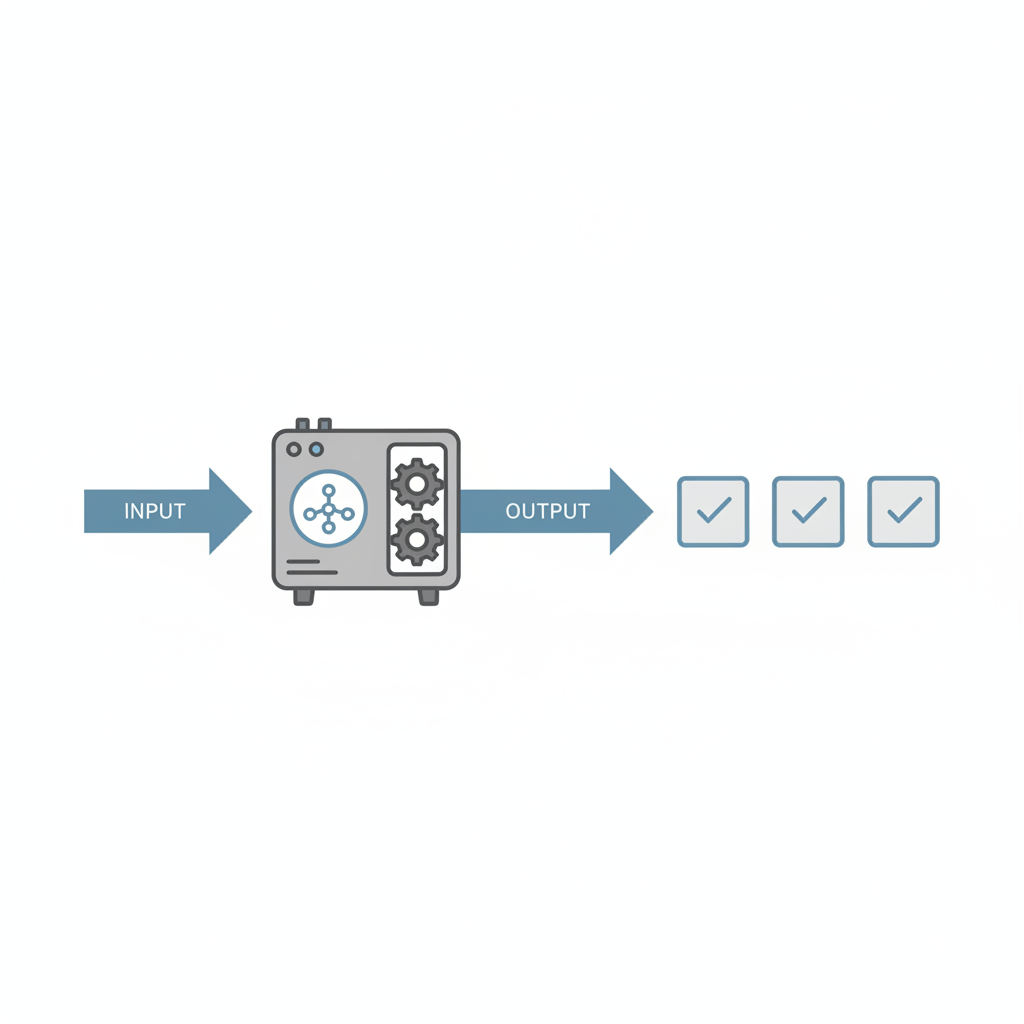
Deterministic AI combines machine intelligence with predictable AI behavior. Because consistency matters in business, deterministic systems guarantee the same output for the same input. Therefore, teams use them when auditability, control, and repeatability matter more than creative variability. A deterministic system produces the same output every time it receives the same input. As a result, testing and monitoring become simpler.
Core principles
- Consistency: same input yields same result every time.
- Rule enforcement: decisions follow explicit, testable rules.
- Auditability: logs and rules explain why a decision happened.
- Isolation of probabilistic models: AI handles interpretation, not final enforcement.
How it differs from other AI
- Deterministic versus non-deterministic: non-deterministic models produce varied outputs, while deterministic systems do not.
- Predictable AI behavior versus creative generation: use deterministic paths for workflows, and probabilistic models for classification or summarization.
- Operational advantage: deterministic systems are easier to debug and certify.
Examples and context
For example, Zapier offers deterministic execution across many apps, so workflows behave predictably. For practical guides, see AllosAI’s Zapier walkthrough. Many vendors, including Salesforce, are shifting toward rule-based automation to improve trust. In practice, teams build hybrid pipelines that interpret inputs with ML and then enforce decisions deterministically. This interpret structure enforce pattern reduces errors and improves accountability.
Practical applications and benefits of Deterministic AI
Deterministic AI drives reliable business automation and process optimization in many industries. Because it enforces consistent rules, teams gain repeatable outcomes and clearer audits. Therefore, leaders choose deterministic paths when predictability matters more than novelty.
Common applications
- Customer service automation: use deterministic workflows to route tickets and apply SLAs, reducing errors and disputes. For example, teams combine LLM interpretation with rule enforcement to avoid hallucination risk.
- Finance and compliance: deterministic execution enforces approval rules, audit trails, and regulatory checks, improving accountability and risk control.
- Supply chain and logistics: predictive systems paired with rule-based actions automate reorder triggers and exception handling, increasing uptime and lowering costs.
- Sales operations: deterministic workflows process leads consistently, assign territories, and trigger offers, so outcomes remain fair and traceable.
Business benefits
- Increased predictability and reliability because the same input produces the same result every time.
- Better decision-making because deterministic outputs integrate with business rules and KPIs.
- Easier testing and monitoring so teams ship automation faster with fewer incidents.
- Improved auditability and compliance due to explicit logs and rule traces.
Practical notes
In practice, hybrid AI pipelines interpret inputs with probabilistic models and then enforce actions deterministically. For a hands-on example, see a Zapier integration guide at AllosAI. Also, many platforms offer deterministic workflow engines, such as Zapier. Finally, vendors like Salesforce are shifting toward more predictable, rule-based automation to restore confidence.
| Aspect | Deterministic AI | Probabilistic AI |
|---|---|---|
| Predictability | High predictability. Same input yields same output every time. | Variable outputs. Same input can produce different results. |
| Reliability | Strong for repeatable business processes and SLAs. | Strong for tasks needing flexibility and learning. |
| Common use cases | Rule-based automation, compliance checks, workflow enforcement. | Classification, summarization, content generation, pattern recognition. |
| Complexity | Lower runtime complexity; rules and logic are explicit. | Higher model complexity; requires training and tuning. |
| Outcomes | Consistent, auditable, easy to test and debug. | Creative, adaptive, sometimes non-repeatable outcomes. |
| Testing and monitoring | Easier to test with deterministic inputs and expected outputs. | Requires statistical validation and monitoring for drift. |
| Auditability and governance | Clear decision traces and rule logs for audits. | Harder to explain decisions; needs explainability techniques. |
| When to choose | Use when control, compliance, and predictability matter most. | Use when adaptability, perception, or natural language matters most. |
| Example tools and patterns | Workflow engines, rule-based systems, Zapier-style execution. | LLMs, neural networks, probabilistic models, generative AI. |
Conclusion: why Deterministic AI matters for business
Deterministic AI delivers reliable outcomes and stronger operational control. Because it guarantees the same output for the same input, teams reduce risk and speed testing. Therefore, leaders gain clearer audits, simpler monitoring, and fewer production incidents. As a result, organizations make faster, more confident decisions.
AllosAI leverages deterministic automation to help businesses and creators manage workflows, communication, and engagement. For example, AllosAI combines AI interpretation with rule-based execution to keep outputs predictable and auditable. Additionally, the platform integrates with tools and apps to automate social media, customer touchpoints, and content workflows. Visit our website to learn more here. Try our app platform at AllosAI App Platform. Explore guides and case studies in our Blog and Knowledge Hub here.
Adopt deterministic patterns when control and compliance matter most. However, remember to balance determinism with probabilistic models for tasks that need creativity or perception. Finally, explore AllosAI to design hybrid workflows that scale reliably and protect your customers and brand.
Frequently Asked Questions (FAQs)
What is Deterministic AI?
Deterministic AI guarantees the same output for the same input. Because it enforces explicit rules, it produces predictable AI behavior. Therefore, teams use it when auditability and repeatability matter.
How does it differ from probabilistic AI?
Probabilistic AI like LLMs can produce varied outputs for the same prompt. However, deterministic systems return consistent results. In practice, probabilistic models handle interpretation while deterministic rules enforce final actions.
Where does Deterministic AI fit in business?
It fits in business automation, compliance, and predictive systems. For example, finance approvals, SLA routing, and supply chain rules benefit from deterministic execution. As a result, teams reduce errors and simplify audits.
Can companies use both deterministic and probabilistic AI together?
Yes. The hybrid pattern uses AI interpretation then deterministic execution. This interpret → structure → enforce model mixes flexibility with control. It improves reliability while preserving intelligent parsing.
What are the key business benefits?
Main benefits include increased predictability, easier testing, stronger auditability, and better decision consistency. Therefore, deterministic AI helps scale operations with lower risk and clearer governance.