
To stay competitive, companies must improve AI agents that power marketing and support workflows. Better agents cut response times, reduce errors, and free teams to focus on strategy. However, doing so requires solid testing, clear version control, and ongoing maintenance. We will outline practical steps to collect data, grade outputs, and run a tight build test loop.
By applying focused tactics such as collecting 20 to 50 recent agent outputs for grading, building three test lists that cover happy path, worst case, and red team scenarios, using a dealbreaker and quality scorecard, and adopting clear versioning and changelogs, you can quickly detect regressions, increase grounding from knowledge bases, and scale agents across channels; therefore you convert repetitive tasks into measurable productivity gains, improve customer experience, lower support costs, and accelerate marketing experiments across teams while maintaining clear human oversight and a tight build test loop for fast iteration and governance.
Technological upgrades to improve AI agents
Modern AI agents improve with focused upgrades to language models and data integration. Upgrade language understanding by moving to stronger models like GPT-5.1 or tuned ChatGPT variants, because better reasoning reduces hallucinations. Add retrieval augmented generation RAG and a curated knowledge base to increase grounding. Use tool schemas and APIs to keep responses actionable, and connect systems via middleware to avoid manual data entry. For integration, consider middleware patterns explained here.
Actionable technology checklist
- Pick one randomness control at a time, such as temperature or top-k, not both. This stabilizes output.
- Use RAG with chunking and overlap to improve grounding and reduce token costs.
- Track token usage when you upgrade models; for example record changes after a GPT-5.1 migration.
- Integrate Zapier Agents to connect runtime logic to 8,000 plus apps for orchestration; see https://zapier.com for connectors and automations.
- Audit knowledge sources regularly, because RAG quality depends on source quality.
Operational tactics to improve AI agents
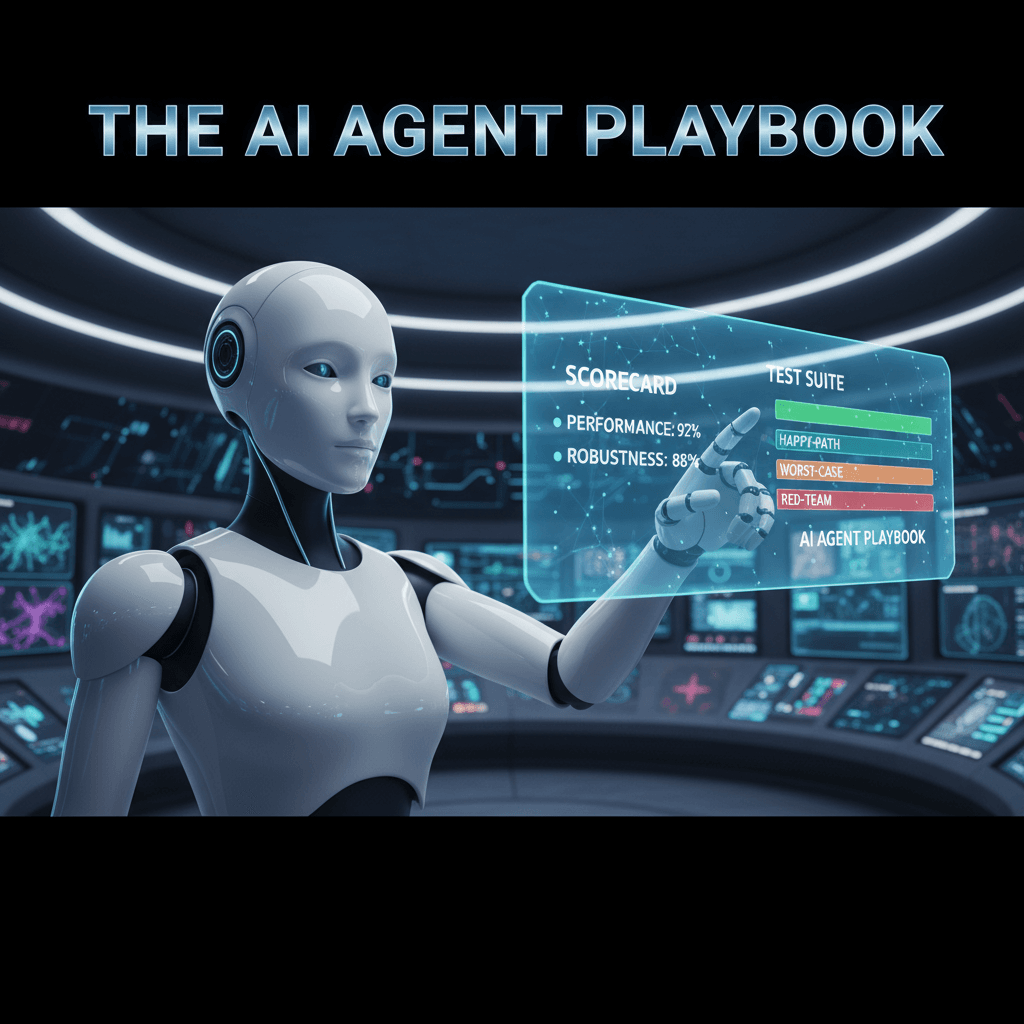
Operational work makes upgrades reliable and scalable. Implement a tight build test loop with quick iterations. Gather 20 to 50 recent agent outputs for grading, and create three test lists: 10 happy-path, 10 worst-case, and 10 red-team examples. Use a two-part scorecard with dealbreakers and a 0 to 2 quality scale. This approach supports sandbox testing and version control for agents.
Key operational playbook
- Grade and iterate quickly by feeding 5 to 10 graded examples during the build test loop.
- Maintain changelogs and versioning, for example v1.0.0 to v1.1.0 for noticeable changes.
- Monitor performance and user feedback continuously, and route edge cases to humans in the loop.
- Add data leak prevention controls and policies; technical guidance here.
Finally, measure ROI by tracking support time saved and response accuracy. For adoption tips and time saving case studies, review Zapier assistant guidance at https://allosai.com/blog/zapier-ai-assistant-hours/.
Related keywords: AI agent maintenance, version control for agents, sandbox testing, scorecard and rubric, retrieval-augmented generation RAG.

| Tool or Technique | Ease of integration | Cost-effectiveness | Scalability | Typical use cases |
|---|---|---|---|---|
| Retrieval-augmented generation (RAG) | Medium; requires knowledge base and chunking | High long-term; reduces hallucinations and support errors | High with proper indexing | Grounded answers; FAQ retrieval; support knowledge |
| Model upgrades and fine-tuning (GPT-5.1, ChatGPT) | API-based; low to medium effort | Variable; higher compute costs for large models | High for hosted APIs; tuneable for scale | Complex reasoning; tailored tone; marketing copy |
| Middleware and orchestration (Zapier Agents, APIs) | Easy; many connectors | High ROI; automates manual work | Very high; thousands of integrations | Cross-system automations; data sync; workflows |
| Version control and changelogs | Easy process; standard git or naming | Very cost-effective | Scales with governance | Safe deployments; rollback; audit trail |
| Monitoring and evaluator GPTs (scorecards) | Medium; needs tooling and datasets | Cost-effective; prevents regressions | High; automated grading at scale | QA, regression tests, red-team grading |
| Small models and edge deployment | Medium; infra and packaging work | Cost-effective at scale | Very scalable on edge nodes | Low-latency agents; privacy-sensitive tasks |
Real world examples and case studies: improve AI agents
Below are three concise case studies that show measurable gains when teams improve AI agents. Each example focuses on support, lead capture, or social engagement.
- Case study 1: E commerce support automation
A mid market retailer adopted RAG and tighter system prompts. As a result, first response time fell from 2 hours to 20 minutes. Consequently support volume handled automatically rose to 55 percent. Customer satisfaction score increased by 7 points. The team used a two part scorecard and weekly grading to prevent regressions. - Case study 2: B2B lead capture and routing
A SaaS company deployed Zapier Agents to connect forms, CRM and calendars. Therefore lead qualification moved from manual triage to automated scoring. Lead response time dropped to under 5 minutes. Qualified leads increased by 32 percent. Additionally sales conversion rose by 12 percent quarter over quarter. - Case study 3: Social media engagement and moderation
A media brand tuned a ChatGPT variant for brand voice and added evaluator GPTs. As a result, comment moderation costs fell by 40 percent. Engagement on priority posts rose 2.5 times. The team kept human in the loop for edge cases and used changelogs when pushing updates.
Key takeaways
- Measure impact with concrete metrics such as response time and conversion rate.
- Iterate fast using 5 to 10 graded examples per build cycle.
- Maintain versioning and changelogs to roll back if needed.
Effective Strategies to Improve AI Agents
Effective strategies to improve AI agents combine technical upgrades, operational rigor, and human oversight. Start with model improvements, RAG, and cleaner data integration to increase grounding and reduce hallucinations. Then implement tight build test loops, scorecards, and sandbox grading to detect regressions quickly. Also adopt version control, changelogs, and clear rollback plans before deploying changes. Measure impact with response time, automation rate, and conversion metrics to prove ROI.
For scalable automation, consider a unified platform that centralizes social and support operations. AllosAI serves this need. It is a unified AI automation platform that replaces social teams and first line support without adding headcount. It provides 24/7 response coverage, an integrated Social Media Hub, and centralized communication and content operations.
Explore AllosAI at AllosAI Overview. Try the app at AllosAI App or read the knowledge hub at AllosAI Knowledge Hub for hands-on guides. Follow updates on X.
Therefore, explore AllosAI to scale operations and improve audience interaction without growing staff.
Frequently Asked Questions (FAQs)
How quickly can I improve AI agents?
Improvement speed depends on scope and data. However, you can get fast wins in days to weeks. Start with cleaner prompts, stricter randomness controls, and RAG. Then feed 5 to 10 graded examples into your build test loop. These quick tests reveal regressions early and speed iteration.
What metrics should I track to measure success?
Track practical, business driven metrics such as:
- First response time and automation rate
- Accuracy or grounding percentage from RAG checks
- Customer satisfaction and conversion lift
- Token usage and cost per interaction
These metrics prove ROI and guide prioritization.
How do I test changes safely without breaking production?
Use sandbox testing and version control. Create three test lists: happy path, worst case, and red team. Also maintain a changelog and rollback plan. Therefore, you can deploy confidently and revert quickly if issues appear.
How do I integrate agents with existing systems and workflows?
Use middleware, APIs, and tool schemas for clean integrations. For example, Zapier Agents can connect runtime logic to many apps. Additionally, map data fields and test flows in staging before production.
What risks should I expect and how can I mitigate them?
Expect hallucinations, data leaks, and regressions. Mitigate by using RAG, auditing sources, adding human review for edge cases, and enforcing a review cadence. Finally, document dealbreakers in system prompts to keep behavior predictable.