

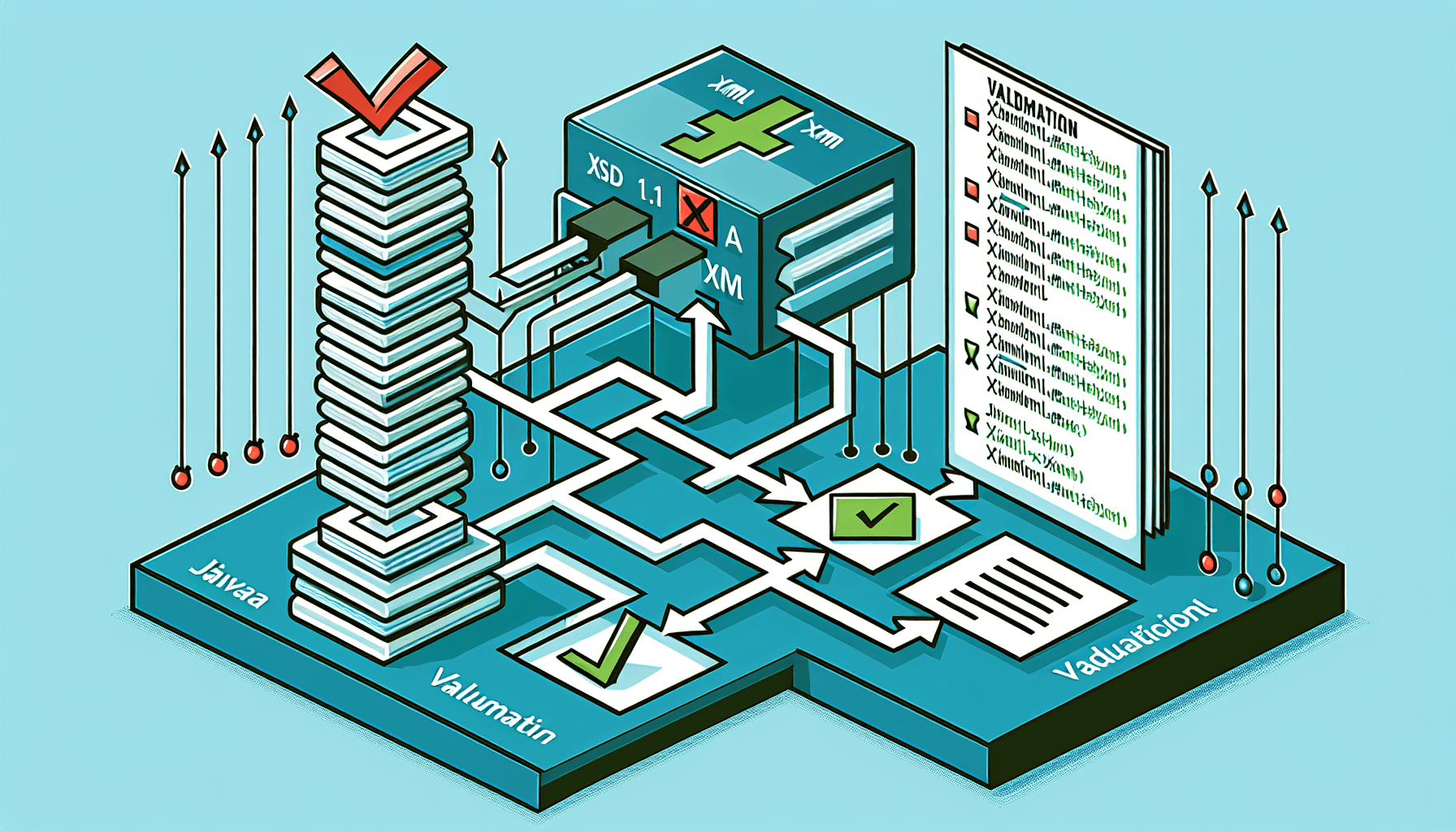
Mastering XSD 1.1 Java Validation: A Comprehensive Guide
Introduction to XML Schema Validation 1.1 in Java
XML, or eXtensible Markup Language, is a pivotal component in data interchange across numerous industries. Its backbone is the XML Schema Definition (XSD), which ensures that XML files are structured correctly for their intended applications. In Java, XSD 1.1 validation is more than a technicality—it’s a necessity for maintaining data integrity and correctness. Comparable to how a spell-checker ensures grammatical correctness in a document, XSD 1.1 Java validation guarantees the integrity and validity of XML data structures, thus preventing potential data anomalies that could compromise application functionality.
Background on XSD 1.1
The evolution from XSD 1.0 to XML schema 1.1 represents a significant leap in XML validation capabilities. XSD 1.1 introduces advanced features that extend the usability and flexibility of XML schemas:
– Enhanced Data Types: XSD 1.1 supports new data types, which cater to a broader range of data validation scenarios.
– Assertions and Conditional Type Assignments: This allows developers to add business rules directly into the schema, increasing precision in data validation.
Understanding these enhancements is crucial for Java developers aiming to employ robust validation in their projects, ensuring a seamless transition from XSD 1.0 where necessary (Hackernoon).
Current Trends in JAXP Schema Validation
Java API for XML Processing (JAXP) is a dominant force in XML processing within the Java ecosystem. Currently, the most popular tool for JAXP schema validation is Xerces, a fully compliant implementation of XSD 1.1 (Hackernoon). However, the landscape is continuously evolving, with Saxon presenting itself as a noteworthy alternative for XML processing in Java. This shift is partly due to:
– Performance Optimizations: Saxon offers improved processing efficiency, especially beneficial for large XML datasets.
– Advanced Feature Set: Saxon includes support for XQuery and XSLT, offering a more comprehensive suite of XML processing capabilities beyond mere validation.
Understanding these trends helps developers choose the right tool for their project requirements, balancing convenience and performance.
Insights on XML Data Correctness
Ensuring XML data correctness is non-negotiable in today’s data-driven industries like finance, healthcare, and telecommunications. Incorrect XML data can lead to severe operational disruptions, akin to how a single missing piece can collapse a Jenga tower. Implementing robust validation using tools such as Xerces enhances Java XML security by preventing flawed data entries from penetrating further processes.
Developers are encouraged to consider additional libraries that provide enhanced security measures, fortifying XML data streams against common vulnerabilities.
The Future of XML Schema Validation in Java
As XML continues to evolve, so too will the tools and technologies supporting it. The future of XML schema validation in Java appears promising, with potential developments on the horizon:
– Integration with AI-driven Tools: Future schema validation tools may leverage AI to predict and prevent validation errors proactively.
– Updates to Existing Libraries: As the XML standard evolves, libraries like Xerces and Saxon will likely receive updates to support new features and improve performance.
Staying abreast of these changes will ensure that Java developers maintain competitive advantages, driving efficiency and reliability in XML data handling.
Call to Action: Get Started with XSD 1.1 Validation!
Ready to bolster your XML validation capabilities? Dive into XSD 1.1 Java validation and explore tools such as Xerces and Saxon. Developers are encouraged to access resources, such as the detailed article on Hackernoon, to deepen their understanding and prowess. Embrace these tools to ensure your applications’ data integrity and set the stage for robust and error-free data exchange.
For more insights, check our related article by Nicolas Fränkel on learning XML schema validation’s importance in maintaining data integrity and correctness. Begin your journey today and empower your Java applications with the next level of XML data validation.