

The Future of Modular LLM Agent Architecture: Enhancing AI Capabilities
Introduction
In the evolving landscape of artificial intelligence, perhaps nothing is as pivotal as the emergence of modular Large Language Model (LLM) agent architecture. These systems represent a strategic shift toward enhancing AI capabilities by integrating various robust technologies, leading to more dynamic and effective artificial intelligence systems. With elements such as agent orchestration and tool-using agents paving the way, the future of AI holds transformative potential. In this blog post, we will explore how modular LLM agent architecture lays the groundwork for this promising future, examining key trends and future forecasts.
Background
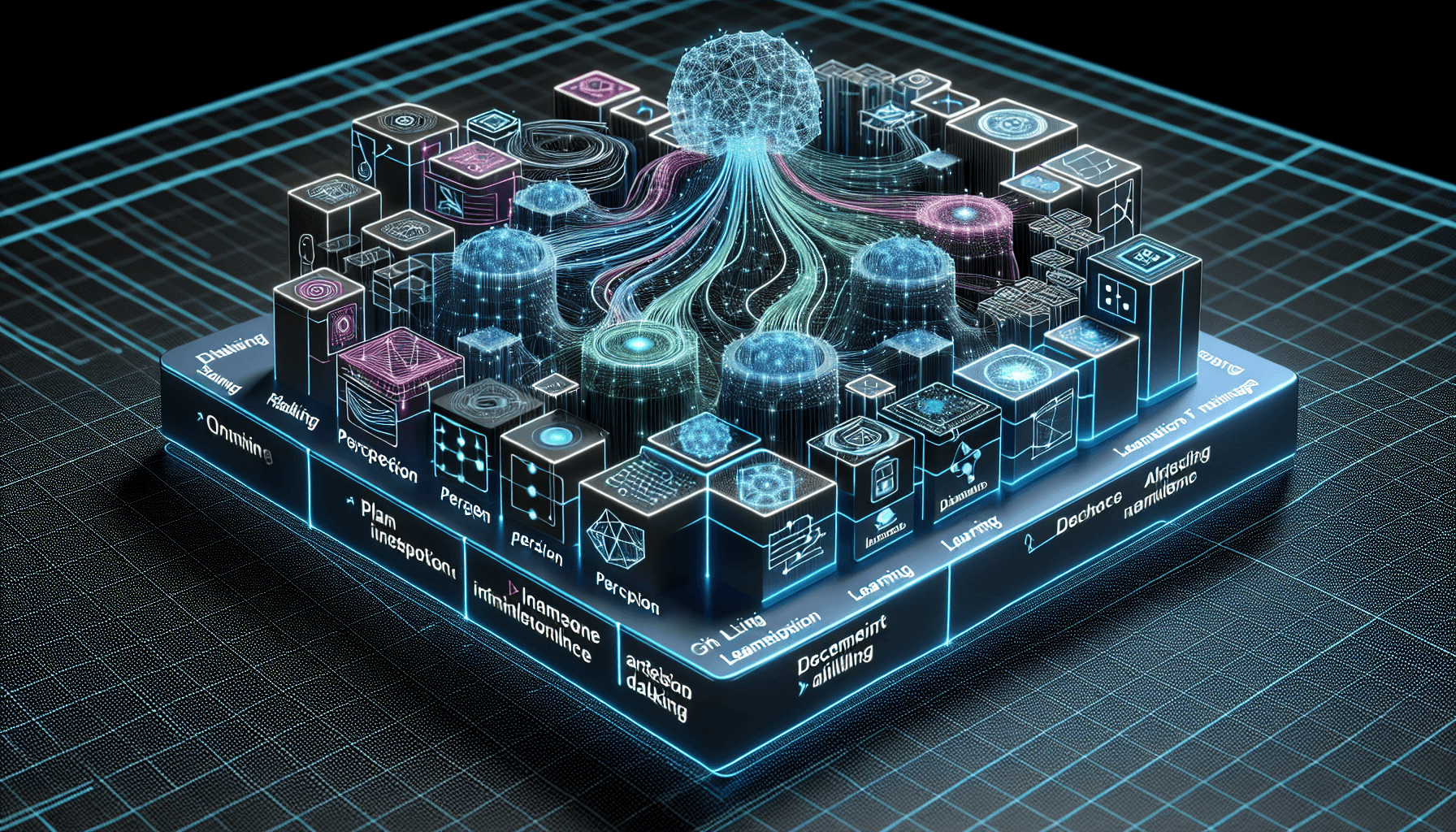
To fully grasp the implications of modular LLM agent architecture, it’s essential to first understand its foundational concepts. At its core, this architecture advocates for a system built on modularity, breaking down complex AI processes into smaller, reusable components. Agent orchestration plays a crucial role here, acting like the conductor in an orchestra, ensuring each component of the AI works in harmony to perform complex tasks.
Moreover, the concept of meta learning agents has added a new layer of adaptability. These agents are designed to rapidly adjust to new tasks by leveraging prior knowledge—much like children learning from a diverse range of experiences to adapt to new challenges quickly. With the support of an evolutionary curriculum, these agents can grow and become more efficient over time, evolving their capabilities through structured learning experiences. Such foundations are not just futuristic ideals but are actively shaping AI development, as noted in recent comparisons of AI architectures (Mommessin, 2025).
Trend
The trend towards tool-using agents underscores a significant transformation in AI scalability and performance. This approach empowers AI systems to use external tools to complete more complex tasks efficiently, simulating human-like adaptability. Imagine an architect with an infinitely capable toolbox, selecting the right tool for each unique architectural challenge — this embodies the shift towards adopting modular LLM agent architectures.
This change enhances the agent scalability by allowing AI systems to accommodate and integrate new tools as they become available, thus maintaining flexibility and efficiency in operation. As highlighted by Mommessin in a comparative study of AI architectures, the integration of self-organizing modular agents presents a scalable and adaptable framework crucial for future AI advancements (2025).
Insight
When we delve into the implementation of modular LLM agent architecture, the benefits and challenges become evident. From practical use cases to theoretical advantages, the insights into how these architectures perform are illuminating. Through specific case studies, particularly those focusing on meta learning and agent orchestration, the advantages are clear: increased adaptability and operational fluency.
An effective analogy is to think of these AI systems as a Swiss Army knife for the digital world — versatile and capable of evolving over time with new extensions. However, challenges such as integration complexity and computational cost remain significant hurdles. The journey to overcome these challenges is ongoing and demands a strategic approach to integration and deployment.
Forecast
Looking towards the future, the trajectory of modular LLM agent architecture appears set for continued evolution, markedly by 2030. We foresee advancements where tool-using agents become more sophisticated, potentially achieving high levels of autonomy and decision-making across industries. Technologies like evolutionary curriculum will likely anchor these developments, promoting continuous learning and adaptability even in volatile environments.
These future-forward strategies will likely redefine industry standards, encouraging AI developers to adopt modular frameworks. The competitive advantage offered by such architectures promises to be substantial, influencing sectors from autonomous vehicles to personalized digital assistants.
Call to Action
The realization of modular LLM agent architectures as the pinnacle of AI development beckons all stakeholders in the tech industry to embrace these possibilities. By adopting these strategic frameworks, industry professionals can propel their projects to new heights of innovation. We encourage readers to explore further resources, leverage emerging tools, and integrate these architectures into their projects.
For more insights and articles on AI architectures, including their strengths and limitations, refer to Maxime Mommessin’s comprehensive analysis on agent architectures.
By adopting these cutting-edge architectures today, you lay the groundwork for a smarter, more adaptable future in artificial intelligence.