

Middleware integration: Orchestrating apps, data, and support workflows
Middleware integration keeps modern systems talking to each other without fragile point to point wiring. In practice, it connects CRMs, help desks, analytics, and AI agents. Because of that, teams gain a single source of truth and faster issue resolution. For example, Zapier and other iPaaS platforms translate events, APIs, and webhooks in real time. They also apply conditional logic to route high priority tickets to humans. As a result, support teams triage faster and automate common resolutions. Middleware integration reduces manual work, removes data silos, and scales operations. It lets businesses build multi step AI workflows that act on signals across apps. Moreover, middleware can enforce data consistency between CRM, ERP, and ticketing systems. Therefore, companies like Veo and JBGoodwin saw major gains after automating flows. This guide shows how to use middleware integration with Zapier to triage and auto resolve tickets. Read on to learn practical patterns, conditional routing ideas, and AI strategies.
What is middleware integration?
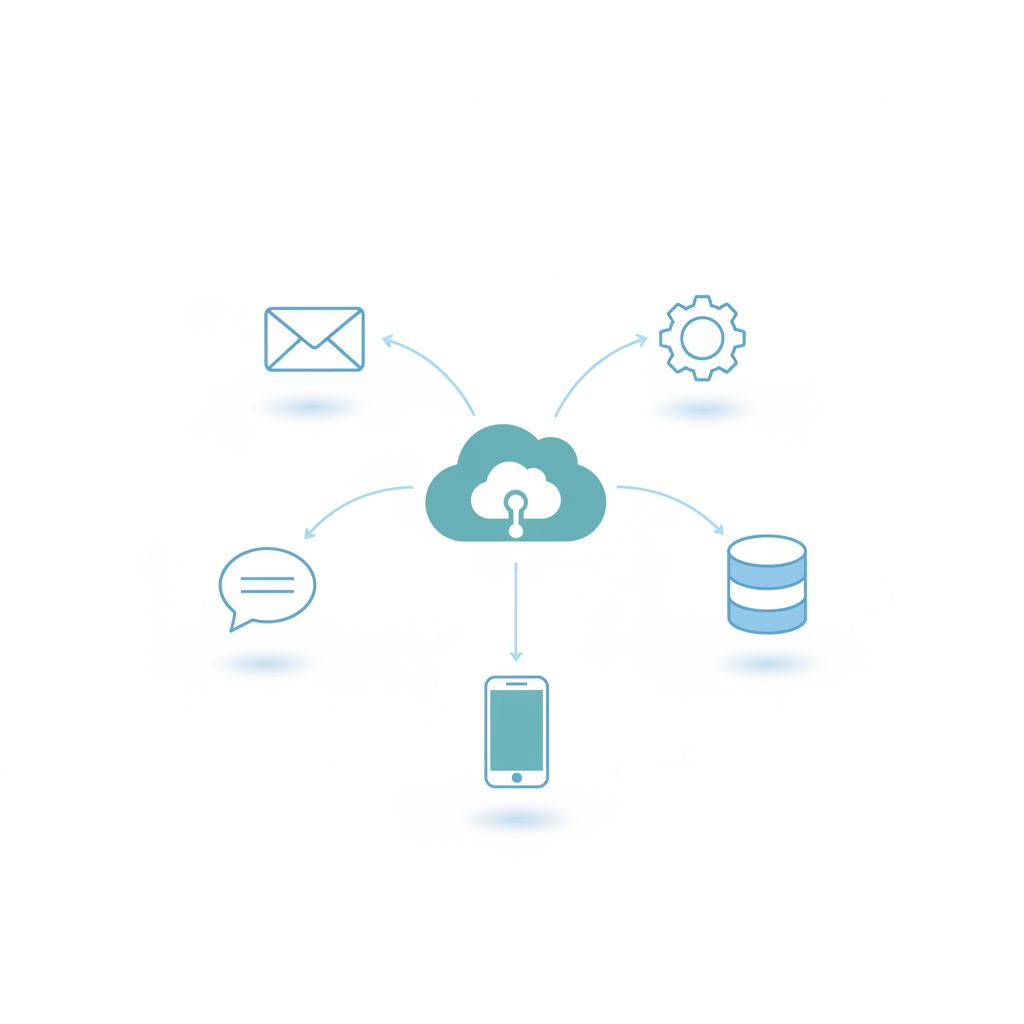
Middleware integration is the behind the scenes software layer that helps systems talk to each other. In practice, middleware integration connects CRMs, ticketing systems, analytics, and AI agents. Because it translates APIs and webhooks, apps do not need point to point wiring. As a result, teams avoid fragile integrations and reduce manual syncing. In short, middleware integration makes data flow reliably across your tech stack.
Why middleware integration matters in IT environments
Middleware integration acts as an orchestrator and translator between services. For example, platforms like Zapier act as integration middleware and let you route events between apps. Moreover, middleware supports event driven architecture, API gateways, and message oriented middleware patterns. Therefore, operations teams can build multi step AI workflows, automate triage, and maintain a single source of truth. For instance, companies such as Remote saved major costs after automating support flows. If you need help choosing the right CRM, see this guide here.
Key features of middleware integration
- Connects to many apps through APIs and webhooks
- Transforms and normalizes data for consistent records
- Applies conditional logic and routing, such as Filters or Paths
- Supports queues, retries, and error handling for reliability
Top benefits
- Reduces manual data entry and human error, so teams work faster
- Eliminates data silos and creates a single source of truth
- Scales processes without adding headcount, therefore saving costs
- Enables observability and audit trails for compliance and debugging
Together, these capabilities let businesses triage issues faster and automate common resolutions. As a result, support teams handle more volume with less pain.
Middleware integration methods and technologies
Middleware integration uses several patterns and tools to move data between systems. Because different apps expose different interfaces, teams mix methods to match needs. Below are common approaches and short explanations to help you choose the right pattern.
Middleware integration: APIs and webhooks
APIs remain the most common integration method. They let systems request data on demand. Webhooks push events when something changes. For example, Zapier connects to APIs and webhooks to orchestrate workflows. See Zapier for practical, no code integrations.
Middleware integration: Message brokers and event streaming
Message brokers enable asynchronous communication and reliability. They queue messages and support retries. Apache Kafka handles high throughput event streams, and RabbitMQ supports many messaging patterns. Learn more at Apache Kafka and RabbitMQ.
Middleware integration: Enterprise service bus and iPaaS
Enterprise service bus or ESB patterns centralize routing and transformation logic. Meanwhile, iPaaS products provide hosted middleware with prebuilt connectors. Therefore, teams pick ESB for complex on prem systems and iPaaS for cloud first stacks.
Middleware integration: Lightweight automation and RPA
Robotic process automation automates UI driven tasks. Meanwhile, middleware can call scripts or serverless functions for custom transforms. As a result, you can combine RPA and APIs to bridge legacy apps.
Key technologies and brief notes
- REST APIs and GraphQL for synchronous requests and flexible queries
- Webhooks for event driven triggers and real time updates
- Message brokers like RabbitMQ for reliable, ordered delivery
- Event streaming with Apache Kafka for high volume telemetry
- ESB for centralized routing and protocol translation
- iPaaS platforms like Zapier for quick, low code integrations
If you want help picking tools, this CRM guide covers integration trade offs here.
Middleware integration tools comparison
Use this table to compare popular middleware integration tools and pick the right fit.
| Tool Name | Key Features | Use Cases | Pricing Model |
|---|---|---|---|
| Zapier | Low code connectors, prebuilt templates, event triggers, Filters and Paths | Small teams, SaaS automation, quick onboarding | Freemium, subscription tiers per user |
| Workato | Enterprise connectors, complex orchestration, recipes, governance | Mid market and enterprise automation, secure integrations | Enterprise pricing, custom quotes |
| Dell Boomi | iPaaS, visual mapping, master data tools, connectors | Cloud integrations, EDI, API management | Subscription per environment and usage |
| Apache Kafka | Event streaming, high throughput, partitioned logs | Real time analytics, telemetry, event driven architecture | Open source free; managed options cost extra |
| RabbitMQ | Message broker, queues, reliable delivery, many protocols | Reliable asynchronous processing, job queues | Open source free; paid support and managed offerings |
CONCLUSION
Middleware integration ties systems, data, and workflows into a reliable backbone for modern businesses. It reduces manual work, prevents data drift, and speeds up issue resolution. Therefore teams can scale support and operations without adding headcount. Moreover middleware integration enables AI driven workflows to act on signals across your stack.
AllosAI acts as a unified AI automation platform that builds on those middleware integration concepts. It connects apps, orchestrates event driven flows, and applies AI to triage and resolve tickets. As a result you can automate repetitive tasks, route high priority cases to people, and maintain a single source of truth. For example AllosAI can combine CRM data, ticket context, and AI responses to close routine issues automatically.
If you want to explore middleware driven automation, start with a small use case and iterate. For more resources visit the AllosAI website, try the app platform, or read tutorials on the Blog and Knowledge Hub at AllosAI. Embrace middleware integration to make your systems smarter and your teams more productive.
Frequently Asked Questions (FAQs)
What is middleware integration and why does it matter?
Middleware integration is the software layer that connects systems and moves data. It translates APIs, webhooks, and events. Because of that, teams avoid fragile point to point wiring. As a result, data stays consistent and teams work faster.
How does middleware integration differ from APIs and webhooks?
APIs and webhooks are interfaces for data exchange. Meanwhile, middleware integration orchestrates, transforms, and routes between many interfaces. For example, middleware can normalize fields and apply conditional routing. Therefore it delivers reliability and business logic in one place.
When should my team choose an iPaaS like Zapier over an ESB?
Pick iPaaS for quick cloud integrations and low code workflows. However, choose ESB for heavy legacy systems and complex protocol translation. If you need scale and governance, evaluate both. Moreover, start small and iterate to reduce risk.
Can middleware integration help automate support ticket triage?
Yes. Middleware integration feeds CRM and ticketing systems with context. Then AI workflows or rules can score and route tickets. As a result, teams triage faster and resolve routine issues automatically.
What risks should we plan for and how do we mitigate them?
Expect data mismatch, rate limits, and security gaps. To mitigate, validate data and implement retries and monitoring. Also use API gateways, authentication, and least privilege access. Finally, document flows and test changes before deploying.
For deeper guides, consult vendor docs and start with a pilot project today.