

AI and Coding: The Future of Software Development
AI and coding are colliding to remake software development. Across teams and startups, intelligent tools speed work and change expectations. Today those tools write, review, and even test code for days at a time.
Developers now work with autonomous agents that remember context and learn from codebases. Because these agents can run long sessions, teams can iterate faster and explore complex fixes. However, autonomy raises new risks for security and correctness that deserve scrutiny. At the same time, productivity gains look undeniable for many projects.
This article digs into how AI driven coding assistants and frontier agents reshape workflows. We will examine real tools, practical benefits, and the hard questions about safety. Along the way, we will highlight AWS examples and the rise of autonomous agents. By the end, you will have a clear view of opportunities and risks.
Read on to see examples from AWS, security tools, and the developer tools that matter. Whether you are a coder, manager, or founder, this piece will give useful context and next steps.
Why AI and coding matters
AI and coding now sit at the center of modern software development. Because they accelerate workflows, teams ship features faster. However, the shift also changes roles and responsibilities for engineers.
Boosting coding efficiency
AI enhanced coding assistants reduce manual effort and speed up routine tasks. For example, autocomplete and context aware suggestions cut typing time. Additionally, tools like frontier agents can remember project context across sessions and handle multi step jobs.
- Developers fix bugs faster because AI surfaces likely causes and fixes
- Teams prototype ideas quickly due to automated scaffolding and templates
- Overall cycle times fall, which improves time to market
Moreover, AWS announced frontier agents such as Kiro and AWS Security Agent that can work autonomously for long periods. For details, see the official AWS announcement at Amazon AI Frontier Agents Announcement.
Automating repetitive tasks
AI and coding integration removes tedious work from engineers. As a result, developers spend more time on design and system thinking. In practice, AI handles code formatting, dependency updates, and basic refactors.
- Continuous code generation for tests and documentation saves hours weekly
- Automated code reviews flag common anti patterns and security smells
- CI pipeline automation reduces manual release steps and human error
For teams exploring automation beyond code, check low code workflow ideas at Low Code Workflow Automation because they extend automation across operations.
Raising software quality and security
AI can improve correctness by generating tests and suggesting fixes. However, models can also propose insecure patterns, so teams must vet outputs. Therefore, integrating AI with security scanners matters.
- AI generated tests increase coverage and catch regressions earlier
- Security focused agents like AWS Security Agent can scan for known vulnerabilities
- Continuous learning from a codebase improves relevance over time
Practical takeaways and tools
To adopt AI and coding, start small and iterate. For instance, pilot an AI code assistant on low risk modules. Additionally, combine AI with human code review to balance speed and safety. For product oriented tooling, consider platforms like AI Code at AI Code, which integrate AI into developer workflows.
Key related keywords and concepts to remember: frontier AI agents, autonomous agents, coding assistants, AI enhanced coding, developer productivity, secure coding, and memory driven agents.
By understanding these subtopics, teams can weigh benefits against risks. Ultimately, AI and coding promise big gains, yet they require governance and careful rollout.
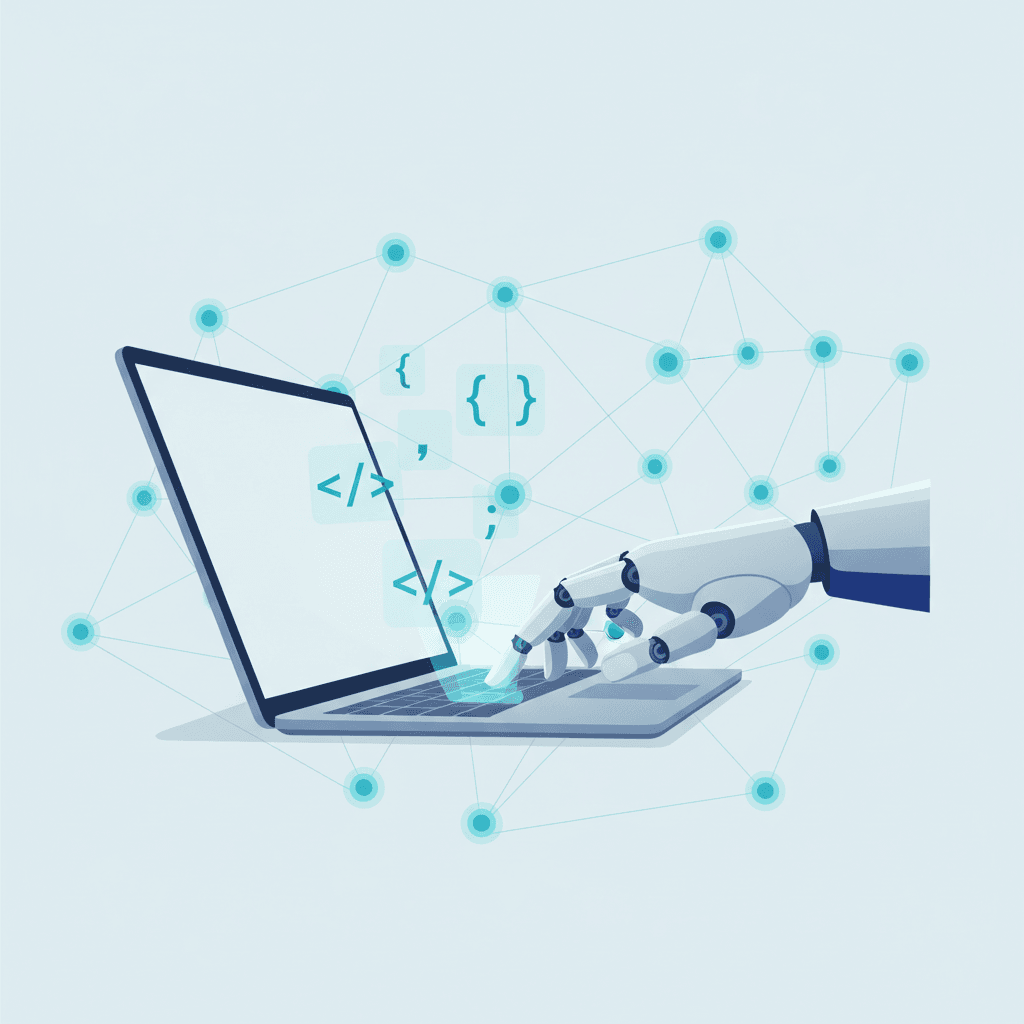
Quick comparison of traditional coding and AI assisted workflows.
The table highlights speed, accuracy, developer experience, and outcomes so teams can decide.
Therefore, this table clarifies how AI and coding differ from classic methods.
| Aspect | Traditional coding | AI assisted coding |
|---|---|---|
| Speed | Slower iteration, manual edits and debugging often elongate cycles | Faster prototyping and iteration; assistants generate scaffolding and code snippets |
| Accuracy | Depends on developer skill; manual reviews catch many bugs | Higher initial accuracy for boilerplate; models may hallucinate so verification required |
| Developer experience | Hands on, full control, repetitive tasks consume time | More focus on design and logic; less typing, more supervision |
| Repetitive tasks | Developers handle formatting, refactors, dependency updates | Automated: formatting, refactors, test generation handled by AI |
| Quality and testing | Manual test design and maintenance | AI helps generate tests and improve coverage, though review is necessary |
| Security | Security checks rely on human audits and tools | Security agents can scan quickly, but false positives and insecure suggestions can occur |
| Scalability | Scaling requires more engineers and process changes | Agents automate scaling tasks and memory of code bases helps continuity |
| Learning curve | Familiar tools, predictable workflows | New tools require training and governance to avoid misuse |
| Cost | Lower tool costs, higher labor costs | Potentially lower labor cost, higher tool and compute expenses |
| Risks and oversight | Human errors, slow discovery of vulnerabilities | Model errors, hallucinations, autonomy risks; needs strict review |
| Best for | Complex, safety critical systems with heavy review | Rapid prototyping, routine modules, CI automation, and code scaffolding |
Evidence and real world use cases of AI and coding
AI and coding already show measurable impacts across companies and projects. Below are concrete examples, named entities, and evidence that illustrate how AI tools improve workflows, reduce errors, and speed development.
AWS frontier agents and autonomous coding
Amazon Web Services announced a set of frontier AI agents, including Kiro and AWS Security Agent, that act like autonomous teammates. Because these agents can work for days and remember prior sessions, they can carry context between tasks and iterate on large features. The official announcement is available at Amazon’s announcement.
Key points
- Kiro is positioned as an autonomous coding agent that can write and maintain code over long sessions
- AWS Security Agent focuses on scanning projects for common vulnerabilities and security smells
- These agents demonstrate how automation can be embedded into developer workflows to reduce manual review time
Startups training agents with digital clones
Several startups build digital replicas of major sites to train agents. Because agents experience realistic environments, they learn to navigate complex interfaces and perform end to end tasks. This approach shortens training time and improves agent reliability in production.
Improved testing and fewer regressions
Teams use AI to auto generate unit tests, integration tests, and edge case scenarios. As a result, test coverage improves and regressions surface earlier. AI generated tests often find gaps humans miss, which reduces time spent debugging.
Industry evidence on safety and autonomy
Autonomy has tradeoffs. For instance, Waymo’s autonomous fleet reports a far lower crash rate than human drivers, which suggests AI can improve safety in certain domains. See analysis at Ars Technica Analysis 1 and Ars Technica Analysis 2.
Quotes and expert context
An industry observer told Reuters about supply pressure in AI hardware markets, noting, “Everyone is begging for supply,” which underscores the infrastructure strain behind AI development. We relied on broader coverage of supply chain stress because direct Reuters links vary.
Developer productivity and real use cases
Practical deployments include
- Code completion and context aware suggestions that speed coding sessions
- Automated refactors and dependency upgrades across large code bases
- Autonomous agents handling bug triage and low risk fixes
- Security focused agents scanning for common vulnerabilities before CI
Best practices drawn from evidence
- Combine AI outputs with human review to reduce hallucinations and insecure suggestions
- Start with non critical modules when piloting autonomy, then expand
- Monitor metrics like time to merge, bug reopen rates, and test coverage to measure impact
These real world examples show that AI and coding integration delivers clear gains. However, they also highlight the need for governance, security checks, and infrastructure investment to manage risks and scale safely.
Conclusion
AI and coding have already transformed how teams build software. They boost speed, automate repetitive tasks, and raise test coverage. However, autonomy brings new risks that require governance and human oversight. Therefore, teams must pair AI tools with clear review processes and security checks.
AllosAI offers practical solutions for this new era. The platform provides intelligent content creation, workflow automation, customer engagement, and business intelligence. Additionally, AllosAI delivers external chat support for instant AI powered help that reduces support load and speeds response. Explore the platform at AllosAI and the App Platform at App Platform. For deeper resources, visit the Blog and Knowledge Hub at Blog and Knowledge Hub and follow updates on X.
As a result, businesses can scale efficiently while managing risk. Start with low risk pilots, measure impact, and expand successful workflows. In the months ahead, AI driven coding will continue to mature, and thoughtful adoption will unlock its full promise. AllosAI aims to help teams capture those gains and build smarter, safer software.
Frequently Asked Questions (FAQs)
What are the main benefits of AI and coding for developers?
AI speeds routine tasks and reduces manual errors. Because assistants suggest code, developers prototype faster. As a result, teams ship features sooner and increase test coverage.
Does AI threaten developer jobs?
AI automates repetitive work, however it augments human skills. Developers shift to higher level tasks like architecture, review, and design. Therefore, roles evolve rather than disappear.
What are the biggest risks when adopting AI in code?
Model hallucinations and insecure suggestions pose risks. Additionally, autonomy can hide errors if teams lack oversight. So implement review gates, security scanners, and clear governance.
How does AI improve software quality and security?
AI generates tests, flags anti patterns, and speeds patching. Moreover, security agents can scan codebases for known vulnerabilities. However human verification remains essential for critical systems.
How should a team start with AI assisted coding?
Start with low risk pilots and measurable goals. Then train agents on internal repos and monitor metrics. Finally combine AI outputs with human review and iterate.