


Lead management sits at the center of modern sales and marketing success. It coordinates lead generation, qualification, nurturing, scoring, distribution, conversion, and tracking for predictable growth. In short, lead management means capturing prospects in real time from website forms, landing pages, ads, and events; enriching profiles with firmographic and behavioral data; routing each contact to the right representative; and applying automation, CRM rules, and lead scoring so teams can respond faster and close more deals, because when those steps link together you reduce friction and lift conversion rates.
For small teams, automation and AI orchestration make this process repeatable and scalable. Therefore, investing in disciplined lead management matters: it enhances the customer experience, saves time and resources, enables fair lead distribution such as round-robin assignment, and feeds sales intelligence so revenue grows steadily while your team avoids chasing cold leads without a plan and improves forecasting accuracy quickly, reliably, too.
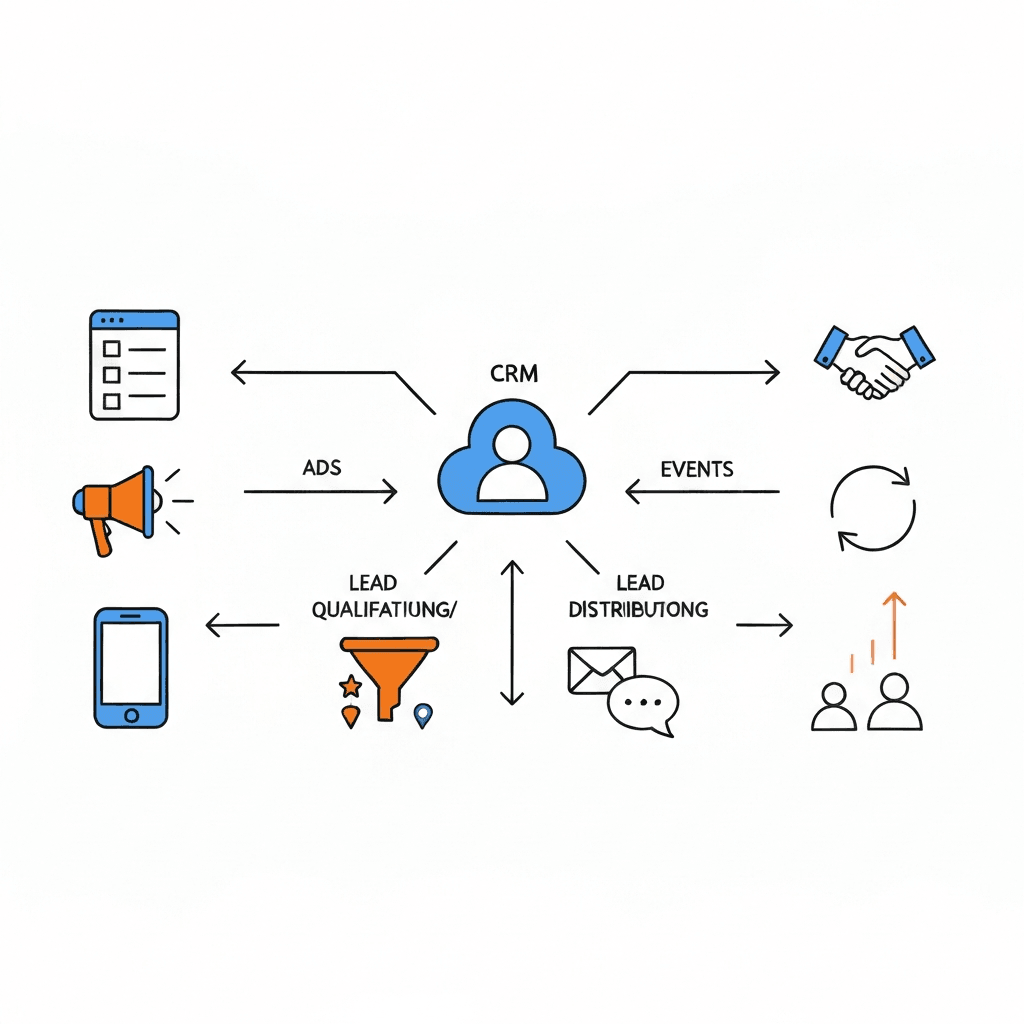
Key components of lead management
Effective lead management depends on a few core components. Together they create a predictable pipeline and a better customer experience.
Lead capture
- Capture leads in real time from forms, landing pages, ads, and event signups.
Use automation so every submission flows straight into your CRM. For example, automated capture can pull Facebook Lead Ads and landing page forms into a single system, because this reduces manual entry and speed matters.
Lead tracking
- Track activity, source, and campaign data for each contact.
A CRM should act as one source of truth for your team. Therefore, log page views, email opens, and call notes. Also, protect that data; see this guide on AI data loss prevention for best practices.
Lead nurturing
- Nurture leads with targeted emails, SMS, and content based on behavior.
Segment contacts and send relevant messaging. However, choose a tool that supports automation and personalization. For a comparison of automation-capable email platforms, see: ActiveCampaign vs Mailchimp.
Lead scoring
- Score leads with points for actions and demographics so sales knows who to contact.
Automated scoring triggers alerts when a lead hits a threshold. As a result, reps respond faster and conversion rates rise.
Finally, orchestration tools like Zapier connect capture, scoring, and routing across apps. Therefore small teams scale follow-ups and fair distribution without extra headcount. See an automation example here: automating with Zapier.
Related keywords: lead generation, lead qualification, lead nurturing, lead distribution, CRM, automation, lead lifecycle, round-robin assignment.
Lead management software comparison
Choose the right tool based on features, budget, and team size. Below is a quick comparison of five popular options.
| Tool | Key features | Pricing (starting) | Integrations | Ideal business size |
|---|---|---|---|---|
| Zapier | Automation builder; multiapp workflows; lead routing; webhook support | Free plan; paid from $19.99/mo | Google, Salesforce, HubSpot, ActiveCampaign | Small to medium teams |
| HubSpot CRM | Native CRM; contact tracking; email sequences; lead scoring | Free CRM; paid Sales Hub from $50/mo | Salesforce, Zapier, Gmail, Outlook | Small to enterprise |
| Salesforce | Enterprise CRM; advanced reporting; custom objects; AI analytics | From $25/user/mo (Salesforce Essentials) | Google, Microsoft, Zapier, MuleSoft | Midmarket to enterprise |
| ActiveCampaign | Email automation; CRM; site tracking; behavior-based campaigns | From $29/mo | Zapier, Shopify, Salesforce, Slack | Small to medium businesses |
| Pipedrive | Visual pipeline; activity reminders; simple lead scoring | From $14.90/user/mo | Zapier, Slack, Gmail, Google Calendar | Small sales teams |
Key considerations
- Integrations matter because they connect capture and routing tools.
- Cost scales with users and automation needs.
- Therefore, choose a product that fits your lead volume and workflow.
Benefits of efficient lead management
Efficient lead management turns chaos into predictable revenue. It reduces response time and keeps prospects engaged. Because speed matters, teams that respond quickly win more opportunities. As a result, conversion rates climb and pipeline value grows.
Improved sales conversion
- Faster lead response leads to higher close rates.
- Automated scoring surfaces high-value prospects to sales.
- Therefore, reps spend time on the right leads, not on every inquiry.
Better customer experience
- Personalized, timely messages improve trust.
- Nurturing workflows deliver relevant content at each stage.
- Consequently, customers feel supported and informed.
Streamlined team collaboration
- A single CRM gives everyone one source of truth.
- Automated routing like round-robin ensures fair distribution.
- Teams avoid duplicate outreach and wasted effort.
Operational benefits
- Automation saves time and cuts manual errors.
- Reporting and tracking improve forecasting accuracy.
- As a result, businesses reduce cost per lead and increase ROI.
Practical outcomes
- Smaller teams scale follow-ups using orchestration tools.
- For example, Zapier connects forms, email, and CRM automatically.
- In short, efficient lead management supports growth with less friction.
Start by mapping your lead lifecycle and choosing tools that match volume. Then automate capture, scoring, and routing so your team can focus on closing deals today.
Conclusion
Strong lead management transforms scattered interest into steady revenue. When teams capture, score, nurture, and route leads efficiently, conversion improves. AllosAI powers that efficiency. It acts as a unified AI platform that automates CRM workflows and replaces manual social media work. It handles 24/7 response, triages inquiries, and routes qualified prospects to reps instantly. Because it unifies messaging, CRM updates, and follow-ups, teams save time and reduce errors.
As a result, businesses scale lead generation and nurturing without adding headcount. AllosAI supports lead scoring, automated routing, and personalized follow-ups. Therefore, your small team can respond faster, improve the customer experience, and close more deals.
Explore AllosAI to streamline lead management and automation. Visit the website AllosAI, try the app platform AllosAI App, or read practical guides at the knowledge hub AllosAI Blog. Follow updates on X/Twitter. Start a free trial or book a demo today to see how automation lifts conversion and saves time.
Frequently Asked Questions (FAQs)
What is lead management and why is it important?
Lead management is the process of capturing, qualifying, nurturing, scoring, routing, and tracking prospects. It matters because it turns interest into predictable revenue, reduces response time, and improves customer experience. With automation, teams scale follow-ups and reduce manual work. Start by mapping where leads come from and which steps convert best.
How do I choose the right lead management software?
Start with your team size, lead volume, and required integrations. Pick tools that offer real-time capture, CRM sync, and automation. Also consider pricing, reporting, and ease of use. For small teams, prioritize simple workflows and round-robin routing.
What are best practices for lead nurturing?
Segment leads by behavior and intent. Use timely drip emails, SMS, and relevant content. Score leads for readiness and trigger sales alerts when thresholds hit. However, personalize messages and avoid generic blasts to improve engagement.
Can automation replace human sales reps?
Automation speeds tasks and ensures fast responses, but it does not fully replace human sellers. Use AI to triage, qualify, and handle routine follow-ups. Then route high-value or complex leads to reps for personal outreach.
How quickly should my team contact new leads?
Respond as fast as possible because speed increases conversion odds. Aim to contact qualified leads within one hour when feasible. If you cannot, use automated acknowledgments and nurture sequences to stay top of mind.