

API (Application Programming Interface): The Heartbeat of Modern Technology
In today’s interconnected digital landscape, APIs, or Application Programming Interfaces, are the unsung heroes facilitating seamless communication between disparate software components. Imagine ordering your favorite meal from a food delivery app without having to leave your home; this magic happens thanks to APIs acting as messengers, ensuring data flows effortlessly between user interfaces and backend systems. As we venture deeper into the realm of automation and artificial intelligence, APIs have become more significant than ever. They lay the groundwork for scalable automation, empowering businesses to integrate thousands of applications without writing a single line of code. This transformation is evident in platforms like AI Code, which leverage API capabilities to deliver innovative solutions.
Moreover, the ability of APIs to connect, enhance, and expand functionalities is revolutionizing industries. From financial transactions executed through secure SOAP APIs to agile data fetching with GraphQL, the diversity of API protocols offers unmatched flexibility and efficiency. In essence, APIs are the digital bridges that turn isolated applications into thriving ecosystems, paving the way for advancements in technology and efficiency. As more companies recognize their potential, understanding and utilizing APIs is more crucial than ever for businesses aiming to thrive in this digital age.
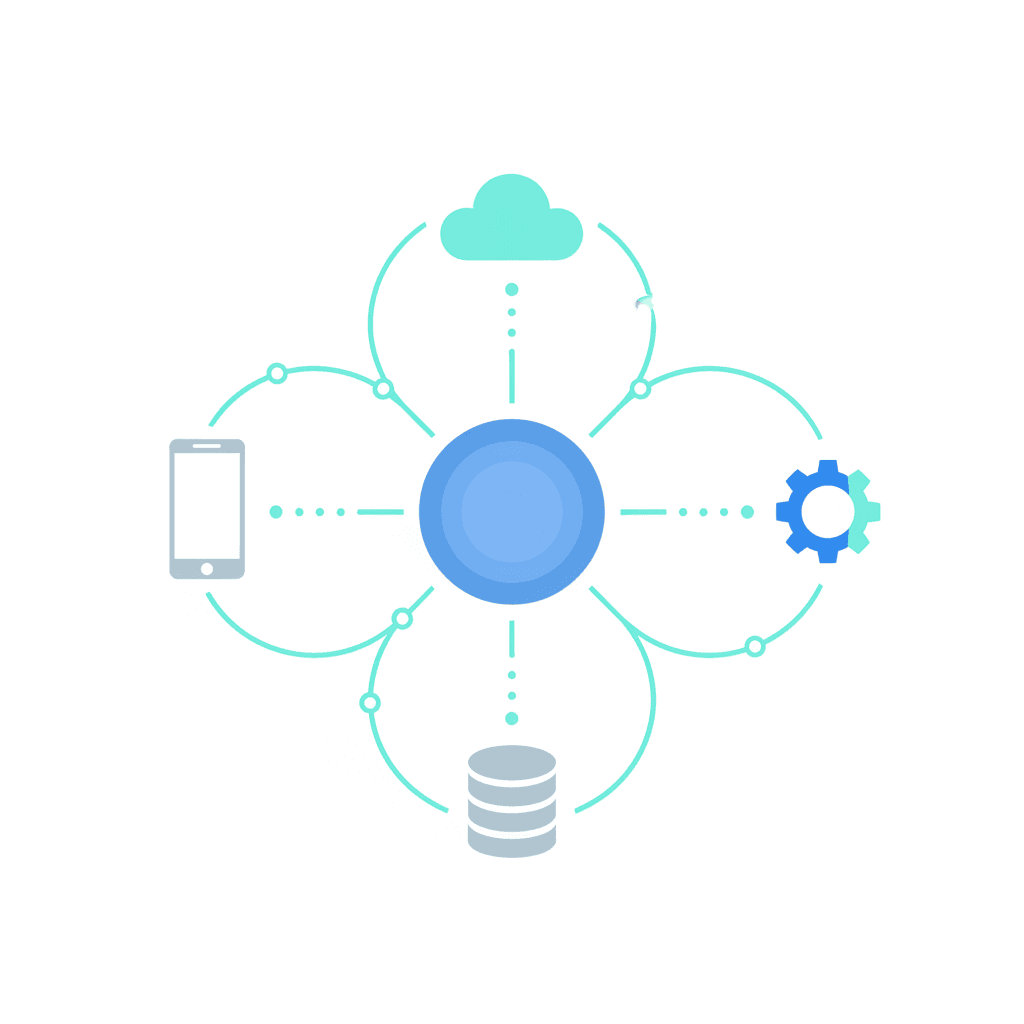
Key benefits of API (Application Programming Interface)
APIs unlock faster development and smoother integrations. They let teams connect systems without rebuilding components. As a result, businesses save time and reduce errors. For an official primer, see the MDN definition.
API (Application Programming Interface) speeds integration and innovation
- Faster time to market because developers reuse existing services.
- Easier integrations since APIs standardize how systems talk.
- Clear example: a Google Form sends data to Outlook via an API, and then an automated email triggers.
In practice, companies use APIs to layer new features quickly. For example, a shop can add Google Maps or payment services without heavy changes.
API (Application Programming Interface) increases scalability and reuse
- Modular architecture means teams scale components independently.
- Reuse reduces duplicated work and lowers long term costs.
- Example: a single billing API serves web, mobile, and back office apps.
Additionally, APIs improve security and observability. Authentication systems like OAuth and JWT protect endpoints. Therefore, teams monitor traffic and catch issues sooner. GraphQL can reduce bandwidth because clients request only needed data. Thus, APIs help performance and cost control.
Other practical benefits include automation, better partner integrations, and faster testing cycles. For instance, Zapier connects thousands of APIs and powers no code automations. In short, APIs connect tools, enable automation, and unlock growth with less effort.
| API type | Description | Common use cases | Advantages | Limitations |
|---|---|---|---|---|
| REST | Simple HTTP based API using standard methods. | Public web services, mobile apps, microservices. | Easy to learn; wide tool support; uses JSON for payloads. | Less efficient for complex queries; can require many requests. |
| SOAP | Protocol for structured message exchange, often uses XML. | Financial systems, healthcare, legacy enterprise services. | Strong standards; built in security and transaction features. | Verbose messages; harder to implement and maintain. |
| GraphQL | Query language that lets clients request specific fields. | Dashboards, mobile apps needing precise data shapes. | Reduces bandwidth; flexible queries; fewer endpoints. | More complex server logic; caching can be harder. |
| WebSocket | Persistent bi directional connection for real time data. | Chat, live feeds, multiplayer games, notifications. | Low latency updates; efficient two way communication. | Keeps connections open which may use more server resources. |
| Webhooks | Event driven push notifications from one app to another. | Payment receipts, form submissions, build notifications. | Immediate updates; simple to consume; low polling overhead. | Can fail silently; needs retry logic and validation. |
| Public / Open API | APIs exposed for external developers to build on. | Third party integrations, marketplaces, public data access. | Increases ecosystem and innovation; attracts partners. | Requires clear docs and strong security controls. |
| Private / Internal API | APIs used inside an organization only. | Microservices, internal dashboards, backend orchestration. | Faster iteration; fewer exposure risks; tailored to needs. | Can become inconsistent without governance. |
| Composite API | Combines multiple service calls into one endpoint. | Aggregated views, workflows, mobile-optimized calls. | Fewer round trips; simplifies client logic. | Adds orchestration complexity on the server side. |
For quick reference, REST is versatile for most web needs, while GraphQL suits complex data fetching. Webhooks and WebSocket excel at real time flows, whereas SOAP remains useful for strict enterprise scenarios. As a result, choosing the right type depends on security needs, performance goals, and developer experience.
API (Application Programming Interface) Drives Real Change Across Industries
From tiny startups to massive enterprises, APIs enable faster product launches and richer user experiences. Below are short case stories that show clear business impact and measurable gains.
Startup Automation and No Code Gains
Many small teams use APIs to automate repeat work. For example, Zapier connects thousands of apps and lets non-developers build workflows without code. As a result, teams cut manual tasks and speed operations.
Ecommerce Platform Growth Through APIs
Shop platforms expose APIs so developers add features quickly. For instance, Shopify’s API ecosystem powers thousands of storefront apps. Therefore merchants gain payment, shipping, and analytics tools fast. This boosts conversion and lowers engineering costs.
Enterprise Reliability and Sector Specific Wins
In finance and healthcare, SOAP and REST APIs handle secure transactions and records. Because these protocols enforce structure, teams meet compliance rules while automating workflows. For example, banks use payment APIs to settle transactions instantly. Meanwhile, hospitals use APIs to exchange records safely.
Real Numbers and Outcomes
- Automation platforms often reduce manual hours by 30 to 70 percent.
- Single API driven features can lift conversion by double digits for e-commerce shops.
- In many firms, APIs cut time to market from months to weeks.
Taken together, these examples prove one point. APIs create leverage. Therefore companies multiply their impact and innovate faster with less risk.
Conclusion
APIs are the connective tissue of modern software. They let companies stitch together services, speed development, and deliver smarter products. As a result, teams can focus on unique features rather than rebuilding core capabilities. Moreover, API (Application Programming Interface) patterns unlock automation, reduce manual work, and improve customer experiences.
For businesses aiming to scale, APIs offer measurable benefits. They increase reuse, enable partner ecosystems, and shorten time to market. For example, teams can use APIs to automate content creation, route leads, and trigger personalized outreach. Therefore, organizations convert integrations into competitive advantage with less engineering overhead.
AllosAI brings these ideas to life with an advanced AI automation platform. The platform helps businesses leverage APIs for intelligent content creation, automated workflows, and improved customer engagement. Try the platform to prototype automations quickly at AllosAI Platform, learn more about product features at AllosAI Features, and explore guides in the knowledge hub at AllosAI Knowledge Hub. These resources show how APIs and AI combine to create efficient, resilient systems.
In short, API (Application Programming Interface) strategy is no longer optional. Adopt clear API design, prioritize security, and use platforms like AllosAI to accelerate automation and growth.
Frequently Asked Questions (FAQs)
What is an API (Application Programming Interface)?
An API is a set of rules that lets software talk to other software. It defines how requests and responses pass between systems. As a result, apps can share data without exposing inner code.
How do REST, GraphQL, and Webhooks differ?
REST uses standard HTTP methods and simple endpoints. GraphQL lets clients request only the data they need. Webhooks push events in real time when something changes. Therefore, choose based on data shape, latency, and control needs.
Are APIs secure and how do teams protect them?
Yes, APIs can be secure when teams use best practices. Use OAuth, API keys, or JWT for authentication. Also enforce rate limits, input validation, and HTTPS to reduce risk.
How do I start integrating APIs into workflows?
First, read the API documentation and try sample calls. Next, test with unit and integration tests. Finally, deploy with versioning and monitoring so you can iterate safely.
Can non developers use APIs for automation?
Absolutely. No code tools like Zapier connect to thousands of APIs. Therefore non developers can build automations that save time and scale work without writing code.