


AI tool sprawl: why scattered AI creates hidden costs and risks
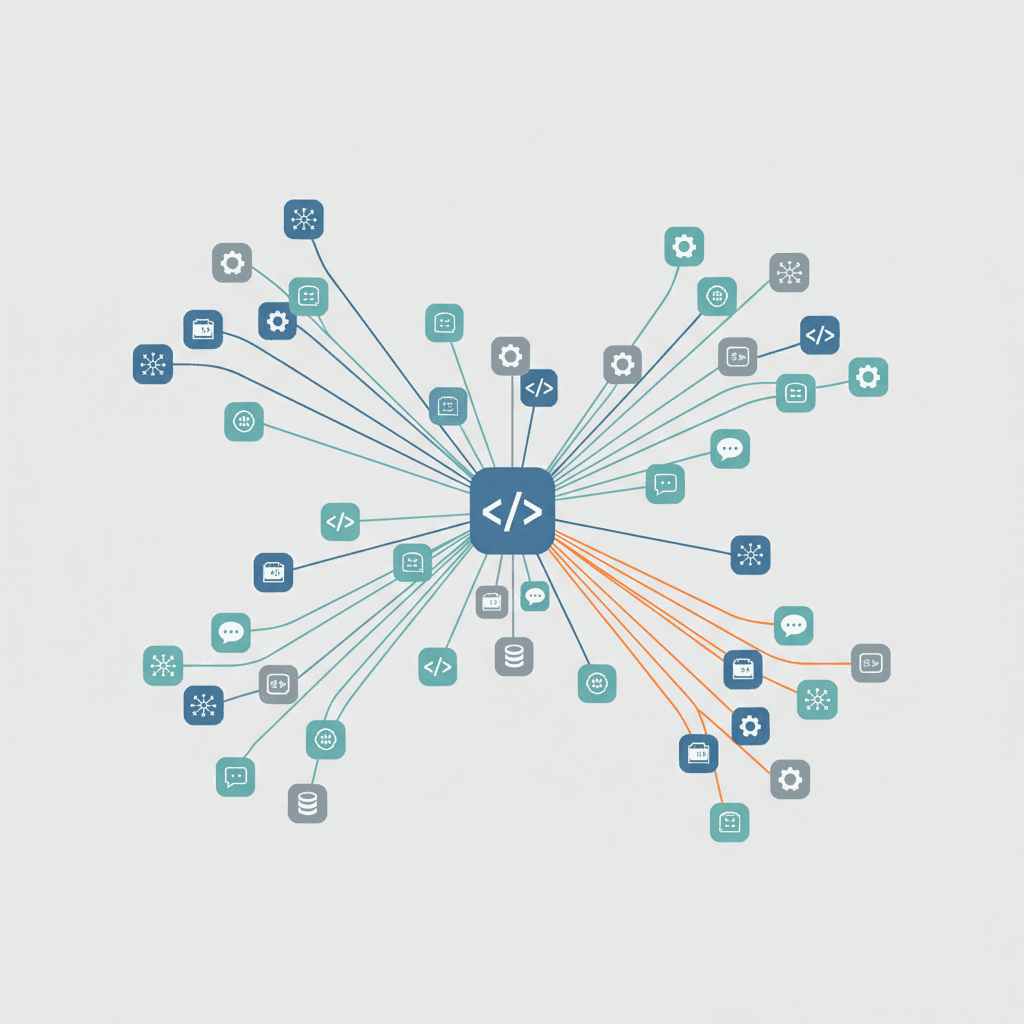
AI tool sprawl is the messy reality of businesses adopting many AI tools without coordination. As a result, teams end up with redundant apps, data silos, and shadow AI that nobody fully controls. This problem grows fast because departments buy tools to move quicker, yet they often skip approvals and integration strategies.
Why it matters now
- It creates security and privacy risks because disconnected tools share data without oversight.
- It wastes money on overlapping subscriptions and duplicate features.
- It slows employees with manual data transfers and fragmented workflows.
Because AI adoption is accelerating, leaders face new challenges in governance and AI orchestration. However, with better integration and clear AI usage policies, teams can reduce risk and increase ROI. In the sections ahead we explain practical steps to tame AI sprawl, connect tools across your tech stack, and build a scalable AI strategy that supports growth and compliance.
AI tool sprawl causes: common triggers and contributing factors
When teams race to adopt new AI, they often create patchwork systems that never connect. As a result, AI tool sprawl spreads across departments and stacks. This growth looks harmless at first, yet it hides duplication, data leaks, and wasted spend.
Here are the most common causes and how they contribute:
- Department driven purchases because teams buy tools to solve immediate problems quickly.
- Shadow AI or rogue tools when employees use unapproved apps without IT oversight.
- Lack of governance and clear AI policies, which allows unchecked tool adoption.
- Vendor proliferation as startups and legacy vendors each offer niche AI features.
- Low barrier to entry from no code and easy APIs, which speeds adoption without integration.
- Legacy systems and siloed data, which prevent seamless tool connections.
- Budget silos and unclear ownership of AI projects that block centralized decisions.
Because many companies prioritize speed over control, they end up with disconnected AI. However, the results are predictable. For example, Zapier’s October 2025 survey found 76 percent of enterprises saw at least one negative outcome from disconnected AI: Zapier AI Sprawl Survey. Meanwhile, thought leaders warn about unmanaged AI risks: The Danger of Unmanaged AI in the Enterprise. For a different angle on applied AI, see Why WorldGen: Generative AI for Interactive 3D Worlds.
Evidence and statistics: how AI tool sprawl affects productivity, costs, and employees
AI tool sprawl has measurable impacts on teams, budgets, and security. Because tools multiply without oversight, organizations face lost time, duplicate spend, and compliance gaps. Below are the most important numbers and what they mean.
Key impacts and data points
- Productivity loss: 29 percent of enterprises say manual data transfers consume employee time. This shows how disconnected workflows slow everyday work.
- Cost and waste: 30 percent report wasting money on redundant AI software. In other words, tool sprawl directly inflates subscription and licensing costs.
- Negative outcomes: Three in four enterprises (76 percent) experienced at least one negative outcome from disconnected AI. This includes errors, data leaks, and broken workflows. Source: Centiment for Zapier survey
- Tool counts and growth: 28 percent of enterprises now use more than 10 different AI apps. Meanwhile, 66 percent plan to increase their AI tool count in the next 12 months.
- Visibility and governance: Only 35 percent of enterprise leaders say AI tools go through proper approval channels. Also, 14 percent have no visibility into what employees use.
- Security and training: 36 percent say AI sprawl increases security and privacy risks, and 34 percent say it makes AI training harder. These issues raise compliance concerns for GDPR and SOC 2 audits.
Expert perspective
“Nine in ten enterprise leaders say a central AI orchestration platform is critical or important,” according to the Zapier/Centiment survey. This quote underlines the need for AI orchestration and better AI governance. See the full survey at Zapier.
Why these stats matter
Because AI sprawl hits productivity, the hidden cost compounds. For example, manual transfers and shadow AI create data silos that block automation. As a result, teams retrain staff, pay for overlapping tools, and expose sensitive data. For context on unmanaged AI risks, see this discussion at Forbes.
Related keywords: AI sprawl, tool sprawl, AI orchestration, shadow AI, data silos, AI governance.
| AI Tool | Primary use cases | Overlapping functionalities | Potential redundancies |
|---|---|---|---|
| ChatGPT (OpenAI) | Conversational assistance, drafting, summarization, code help | Content generation, Q&A, summarization, prompt-based editing | Duplicates writing assistants and simple automation chatbots |
| Google Bard | Conversational search, content ideation, research support | Q&A, content ideation, summarization | Overlaps with other general-purpose LLMs for drafting and research |
| Claude (Anthropic) | Long-form drafting, safety-focused assistant, analysis | Content generation, analysis, summarization | Redundant with other safe-guarded LLM services for writing tasks |
| Zapier AI / Zapier automations | Orchestration, no-code automation, cross-app workflows | Simple automations, trigger based actions, data routing | May overlap with custom scripts or native app automations |
| Jasper | Marketing copy, ad creative, SEO content | Copywriting, templates, tone control | Redundant with LLM writing tools used by marketing teams |
| Airtable AI | Structured data assistance, records summarization, lightweight automations | Data summaries, record updates, simple automations | Overlaps with CRM or BI tools that add AI features |
| AI Web Chat (website chat) | Customer chat, lead capture, on-site support | Conversational responses, FAQ automation, routing | Redundant with other chatbot providers or embedded LLM widgets |
Conclusion: Tame AI tool sprawl with AllosAI
AI tool sprawl creates real costs and risks for growing businesses. Left unchecked, it fragments data, wastes subscriptions, and slows teams. However, you can reverse that trend by centralizing AI strategy and choosing integrated platforms that reduce redundancies.
AllosAI offers an integrated approach that brings content creation, automation, and customer engagement under one roof. Therefore, teams can replace overlapping point tools while improving governance and visibility. As a result, companies cut waste, reduce security risk, and speed up delivery.
If you want to explore practical solutions, start with AllosAI’s website and app platform. Visit AllosAI’s website to learn more about features and use cases. Or try the app directly at AllosAI’s app platform to test AI Web Chat and other integrated tools.
Move forward with a plan to audit your toolset, consolidate where possible, and adopt a unified AI platform. Doing so will help your business harness AI safely and sustainably.
Frequently Asked Questions (FAQs)
What is AI tool sprawl and why should I care?
AI tool sprawl happens when many AI apps operate without coordination. It creates data silos, duplicate spend, and security risk. Businesses should care because sprawl reduces productivity and raises compliance costs.
How does AI tool sprawl affect costs and productivity?
Tool overlap leads to redundant subscriptions and wasted licenses. Manual data transfers slow employees and add error risk. For example, 30 percent report wasted spend and 29 percent cite time lost to manual transfers. As a result, overall ROI falls.
How can we detect shadow AI and rogue tools?
Start audits and usage reviews. Use app access logs and expense reports to spot new subscriptions. Train managers to report unapproved tools. Also, run regular security scans and inventory checks to increase visibility.
What practical steps reduce integration challenges and data silos?
Begin with a tool audit and prioritize critical workflows. Standardize on platforms that support integrations and automation. Build clear AI usage policies and centralize approvals. Then create basic integrations before scaling custom connectors.
Should we consolidate tools or orchestrate them?
Both approaches work. Consolidate when tools duplicate core functions. Orchestrate when specialized apps add value. Therefore, choose a unified platform that offers content creation, automation, and customer engagement to reduce sprawl and improve governance.