
GPT (Generative Pre-trained Transformer): A Practical Guide
GPT (Generative Pre-trained Transformer) is a family of AI models that generate text and more. Because these models learn from large text corpora, they predict and compose language with fluidity. They use the transformer architecture and self-attention to model context. As a result, GPT powers chatbots, writing tools, coding assistants, and multimodal apps that handle images and audio.
This article explains what GPT really means and why it matters for developers and teams. First, we will break down the core concepts like tokens, parameters, and context windows. Next, we will compare model families and sizes, from open weights to commercial options. Then, we will cover practical choices: latency, cost, safety, and alignment with user intent. In addition, we will show how APIs, fine-tuning, and retrieval augmented generation fit into real workflows.
Along the way, you will get actionable advice for picking the right model for your task. For example, we highlight tradeoffs between small efficient models and large reasoning models. Finally, we offer steps to evaluate performance and deploy responsibly, so you build useful and safe applications.
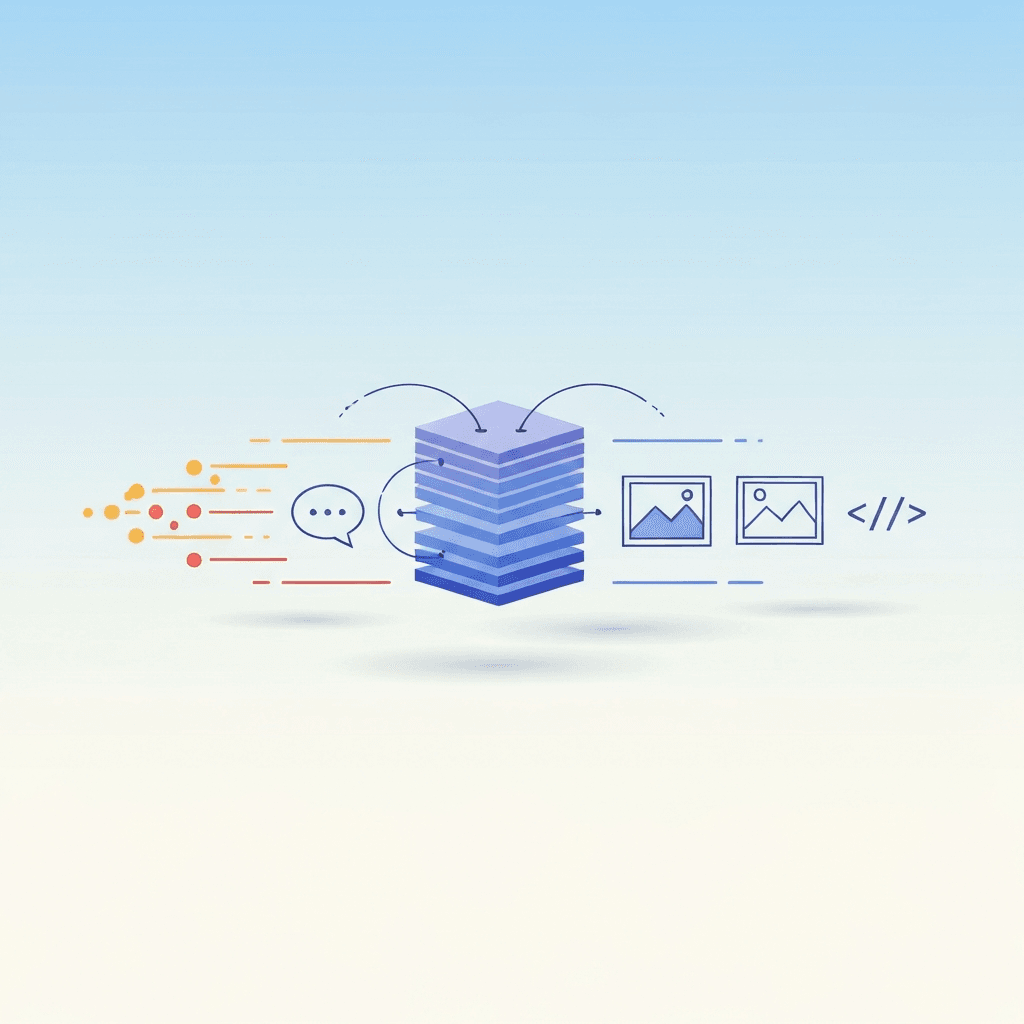
How GPT (Generative Pre-trained Transformer) Works
GPT (Generative Pre-trained Transformer) learns to predict the next token in a sequence. Because it trains on massive text corpora, it captures grammar, facts, and patterns. The core architecture is the transformer, which uses self-attention to weigh words by context. As a result, GPT serves as a versatile large language model for text, code, and multimodal tasks.
Key features and components
- Transformer architecture with multi-head self-attention for context modeling
- Pre-training on massive token datasets; for example GPT-3 trained on roughly 500 billion tokens
- Large parameter counts that scale from millions to hundreds of billions or more, which affects capability
- Fine-tuning and alignment with reinforcement learning from human feedback to reduce harmful outputs
- Context window that defines how much text the model can attend to at once
- Multimodal inputs in recent models so they handle images and audio as well as text
- API and chatbot access for integration into apps and workflows
Training and practical capabilities
First, models undergo unsupervised pre-training to predict tokens. Next, teams fine-tune and align models using labeled data and RLHF. In addition, some modern models use mixtures-of-experts to scale efficiently. Therefore, GPT can perform reasoning, follow complex instructions, and support retrieval augmented generation. For readers who want the technical roots, see the original transformer paper at the original transformer paper and practical implementation notes at Hugging Face documentation.
| Model | Release year | Approx parameters | Typical context window | Multimodal | Key improvements | Typical use cases |
|---|---|---|---|---|---|---|
| GPT-2 | 2019 | 1.5B | 1024 tokens | No | First large-scale transformer for fluent generation; coherent paragraphs | Prototyping, creative writing, demos |
| GPT-3 | 2020 | 175B | 2048 tokens | No | Scale-driven fluency, few-shot learning; trained on ~500B tokens | Chatbots, content creation, code completion |
| GPT-4 | 2023 | >175B (varies by variant) | Varies; extended-window variants exist | Yes (many variants) | Improved reasoning, instruction-following, alignment via RLHF | Complex assistants, multimodal apps, enterprise tasks |
Applications and benefits of GPT (Generative Pre-trained Transformer) technology
GPT (Generative Pre-trained Transformer) powers a wide range of practical applications. Because GPT models use transformer architecture and large language model techniques, they can automate many language tasks. As a result, teams and businesses gain speed, scale, and new capabilities.
Key industry applications
- Customer support: Automate responses, triage tickets, and draft agent replies for faster resolution
- Marketing and content: Generate copy, ideas, and A/B test variants to boost content velocity
- Software development: Produce code snippets, document APIs, and assist debugging in IDEs
- Healthcare: Summarize notes, extract clinical facts, and support triage while preserving privacy
- Finance: Automate report drafting, extract insights from documents, and run scenario summaries
- Education: Offer tutoring, personalized feedback, and content scaffolding for learners
Benefits and practical advantages
- Faster workflows because routine language tasks become automated
- Improved consistency across documents and customer interactions
- Scalable knowledge work with retrieval augmented generation and APIs
- Better developer productivity through code completion and contextual assistants
- Multimodal capabilities let teams handle text, images, and audio in one model
Because models can be fine-tuned and aligned, teams control tone and reduce risk. For readers who want technical depth, see the transformer paper at this link. For implementation notes and tooling, check Hugging Face docs at Hugging Face documentation. Overall, GPT enables AI automation, boosts innovation, and modernizes workflows when used responsibly.
Conclusion
GPT (Generative Pre-trained Transformer) has reshaped how machines understand and generate language. Because it models context at scale, teams automate communication and scale knowledge work. As a result, workflows become faster and customer interactions grow more consistent. However, responsible deployment and alignment remain essential to avoid harm.
AllosAI is a unified AI automation platform that leverages technologies like GPT to optimize social media and customer support functions. It connects models, automation rules, and integrations so teams automate posts, replies, and support workflows. Try the website at AllosAI Website or test the platform at AllosAI App. Read practical guides at AllosAI Blog. Together, these tools make advanced language models practical for everyday business needs.
Looking ahead, GPT will continue to improve multimodal reasoning and context handling. Therefore, organizations that pair strategy with technical guardrails will capture the most value. Adopting platforms like AllosAI helps teams move from experiment to production faster. Start today.
FAQs
What is GPT (Generative Pre-trained Transformer)?
GPT (Generative Pre-trained Transformer) is a family of large language models. It uses transformer architecture and self-attention to generate text. Because it pre-trains on vast token corpora, it learns patterns, grammar, and facts. As a result, GPT powers chatbots, summarizers, and multimodal assistants.
How is GPT trained and updated?
During pre-training, models predict the next token across massive datasets. Next, teams fine-tune models on task data and apply RLHF for alignment. In addition, developers use techniques like mixtures-of-experts to scale efficiently. These steps improve reasoning and reduce harmful outputs.
What can GPT do and who uses it?
GPT supports text generation, code completion, summarization, and multimodal tasks. Industries include customer support, marketing, healthcare, finance, and education. For example, product teams use GPT for AI automation and content generation. In short, it speeds workflows and boosts innovation.
How do I pick the right GPT model?
Choose by tradeoffs: cost, latency, and capability. Smaller models save money and work locally. Larger or multimodal models offer better reasoning and wider context windows. Therefore, match model size and context window to your use case.
Is GPT safe to use?
No model is perfect, however alignment and RLHF help. Also implement guardrails, human review, and monitoring. Finally, test outputs and use retrieval augmented generation to ground responses.